Android OEMs should be worried that Apple’s “boring” era is ending

Dhruv Bhutani / Android Authority
For years, the critique of Apple hardware was as predictable as the product launches. We all knew the script and have been just as guilty of it. Apple would unveil a new iPhone that looked similar enough to the last one, tout a chip that was significantly faster than the competition, and rely on its massive ecosystem to do the heavy lifting. While the best Android OEMs were busy experimenting with folding screens, periscope zooms, and 100W charging, Apple felt content to sit in its “boring” era. It used the sheer brute force of its silicon and software lock-in to keep users from even looking at the alternatives.
The ‘boring’ era wasn’t a failure. It was a strategy that laid the groundwork.
That era is officially over. With the announcement that John Ternus will succeed Tim Cook as CEO in September 2026, the signal to the industry is clear. Apple is no longer satisfied with being the safe choice that wins on efficiency and ecosystem alone. Some might call it premature, but Ternus is far from an unknown quantity — he’s already demonstrated a clear ability to deliver meaningful results.
Under the influence of Ternus as SVP of Hardware Engineering, we have already seen a pivot toward radical hardware engineering that prioritizes aesthetics and physical innovation. And for Android manufacturers who have long used innovation as their primary shield against the iPhone, this shift is genuinely terrifying.
Do you think Apple taking risks again is a good thing?
0 votes
The era of comfortable dominance

Dhruv Bhutani / Android Authority
To understand why Ternus is such a threat to the Android ecosystem, you have to look at what Apple has been doing for the last five years. Apple Silicon, specifically the M-series and A-series chips, effectively gave the company a “get out of jail free” card for stagnant design. When your phone lasts two days on a charge without needing a massive battery, and its processor laps the competition, you do not actually have to change the chassis to sell millions of units.
Apple had the best chip and the strongest lock-in. It didn’t need much else to build a strong market lead.
Unfortunately, this created a formulaic release cycle that many enthusiasts found frustrating. The iPad Pro had the power of a desktop workstation but the form factor of a large phone. The iPhone Pro stayed heavy, thick, and physically familiar because the “magic sauce” was all under the hood. Android OEMs like Samsung and Xiaomi took advantage of this by pushing the boundaries of what a phone could look like. They gave us the Galaxy Z Fold, the ultra-slim Honor Magic V series, and massive camera sensors. They won the hardware war because Apple refused to show up to the fight.
However, silicon was only half of the story. The other half was the software lock-in. Apple’s App Store advantage, iMessage, Continuity, and the seamless handoff between devices created a walled garden that was impossible to leave. Even if a Samsung phone had a cooler screen or a better zoom, the friction of leaving iMessage, iCloud, and a perfectly synced ecosystem was too high for most. Apple had the best engine and the best roads. Now, under Ternus, they are turning towards building the most interesting cars to navigate those roads.
A turning point for iPhone design

Dhruv Bhutani / Android Authority
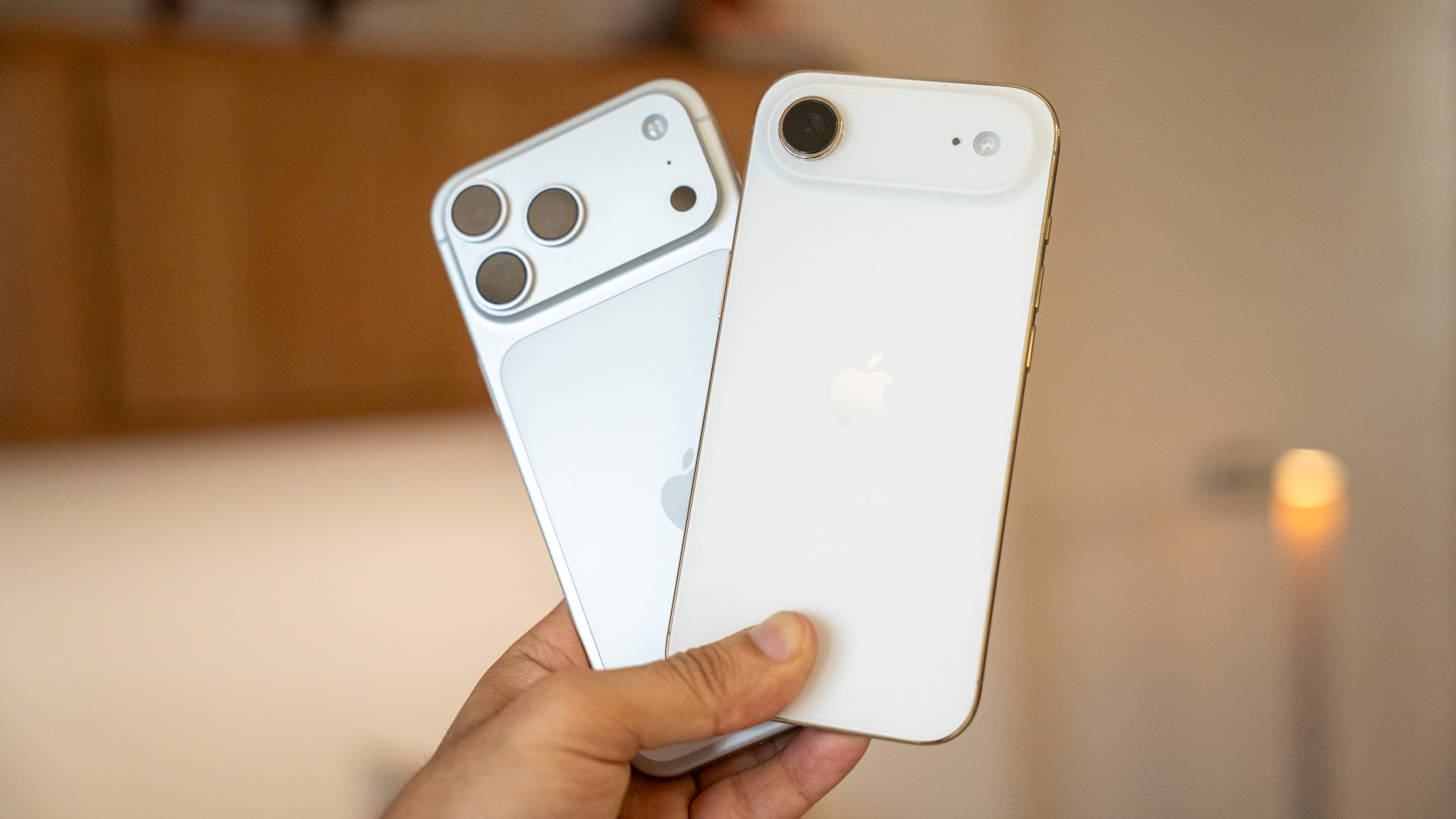
The release of the iPhone Air in September 2025 was the definitive proof that the “boring” era had ended. For years, we heard rumors of a slim iPhone, but the reality was even more radical. At just 5.6mm thick, the iPhone Air is a mechanical marvel that forced every Android OEM back to the drawing board. It proved that Apple was willing to sacrifice some spec-sheet items, like a secondary zoom lens, in favor of a design that felt truly futuristic. Yes, the Galaxy S25 Edge existed, but it was the Air that caught eyeballs.
The iPhone Air wins the moment you pick it up. The phone is a design and lifestyle statement unlike anything else.
This is a classic John Ternus move. As the former head of hardware engineering, diving into the man’s professional accomplishments makes it clear that he has always been obsessed with the feel of a product. Yes, that includes novel ideas like the Touchbar-equipped MacBook. I loved mine and lament the loss of the Touchbar for quick access to Apple Music controls practically every day. The butterfly keyboard? Not so much. But, I digress.
The iPhone Air does not just win on a benchmark. It wins because it is a piece of hardware that people want to hold. As an initial naysayer, I can vouch for the fact that pictures do not convey how much of a marvel it is to behold when you actually hold the phone. It combines a beautiful titanium frame and a precision-milled plateau for the camera and silicon, maximizing every square millimeter of internal space. As an engineer myself, I can’t deny that the confluence of physical beauty and hardware engineering is stunning.
Android manufacturers have spent years mocking Apple for its lack of design changes. Now, they are the ones looking at their 8mm or 9mm thick flagships and wondering how to compete with something that feels like a credit card in the pocket. The iPhone Air might not have sold gangbusters, but it didn’t need to. It is a statement that Apple is back to caring about industrial design as a primary selling point. Heck, not just the iPhone Air, even the choice of a bold color like orange for the iPhone 17 Pro points to a more risk-taking appetite.
Apple is rewriting the entry-level laptop market

Aamir Siddiqui / Android Authority
If the iPhone Air was a shot across the bow for phone makers, the MacBook Neo is a full-scale invasion of the entry-level laptop market. Launched in March 2026, the MacBook Neo represents the first time in a long time that Apple has prioritized fun and form over the industrial rigidity of the Pro or Air laptop lineup. Starting at just $599, it effectively kills the argument for high-end Chromebooks or mid-range Windows laptops.
This is how Apple wins the next generation early.
The Neo uses the A18 Pro chip to deliver a fanless, colorful, and impossibly light experience. It is not just a cheap laptop. It is a piece of hardware designed under the Ternus influence, where beauty and accessibility are just as important as peak performance. By widening the top of the funnel with a device this attractive and affordable, Apple is ensuring that the next generation of users never even considers an Android or Windows alternative.
Fixing the hardware-software disconnect

Dhruv Bhutani / Android Authority
One of the biggest complaints during the Tim Cook era was the hardware-software gap on the iPad. We had M-series chips that could edit 8K video, yet the software felt like a blown-up version of the iPhone. John Ternus has been a vocal advocate for changing this. If you build the most powerful mobile hardware in the world, the software has to let users actually use it.
Under Ternus, the iPad’s push toward becoming a serious creative and productivity device has been driven primarily by hardware. As the executive overseeing Apple’s hardware engineering, he has been closely tied to the transition to Apple Silicon, which gave the iPad a level of performance headroom it simply didn’t have before. That shift has enabled more demanding apps like Final Cut Pro and Logic Pro to run meaningfully on the device, bringing it closer to a legitimate prosumer workflow.
The iPad is finally growing into its potential with software that keeps up with the hardware.
At the same time, the software has been catching up. Features like Stage Manager, improved multitasking, and better external display support point to Apple’s growing ambition to position the iPad as more than just a consumption device. This aligns with reporting from Apple-insider, Mark Gurman, who noted that Ternus had long argued the iPad’s hardware was ahead of what iPadOS allowed it to do.
The result isn’t a single, broad shift, but a steady convergence of hardware and software development. The iPad still prioritizes thinness and a touch-first experience, but it’s increasingly paired with the kind of performance and software capabilities that make it viable for real creative work.
This is bad news for the Android tablet market. For a while, Samsung’s Tab S series had the lead because it offered a more desktop-like experience through DeX. But as Apple closes the software gap while maintaining a significant lead in silicon efficiency and hardware thinness, the reason to buy a high-end Android tablet is vanishing. When the hardware is this beautiful, and the software finally works, the competition, well, has a lot of soul searching to do.
What the Apple Vision Pro really represents

Brady Snyder / Android Authority
This is what Apple Vision Pro looks like with no third-party accessories or modifications.
The Vision Pro is perhaps the best example of the experimental Apple that Ternus represents. It is a complex piece of engineering with no immediate payoffs that takes massive risks with materials and user interaction. It is not a product designed by a supply chain expert. It is a product designed by someone who wants to see how far hardware can be pushed and what the future of user interaction could look like.
The Vision Pro is Apple building for a future it hasn’t fully defined yet.
Even if the Vision Pro remains a niche product for another few years, its existence serves a purpose. It proves that Apple is willing to get weird again. It shows that they are experimenting with high-resolution micro-OLED displays, advanced sensor arrays, and spatial computing in a way that no one else is currently matching. Certainly not in the consumer AR/VR space. This experimental spirit is trickling down into the rest of the lineup. The ultra-thin M4 iPad Pro and the iPhone Air are direct beneficiaries of the manufacturing techniques pioneered for the Vision Pro.
What happens when Apple does it all?

Dhruv Bhutani / Android Authority
For a long time, the decision to buy an Android flagship was easy for enthusiasts. If you wanted the best screen tech, the fastest charging, or the most interesting industrial design, you bought Android. If you wanted the most stable software and the best chip, you bought an iPhone. But what happens when Apple starts making the most interesting industrial design, too?
When Apple gets interesting, Android loses its edge.
The “boring” era allowed Samsung and Google to breathe. They knew they could win on hardware variety because Apple was too conservative to try a foldable or a radically thin phone. But the Ternus era suggests that Apple is finally ready to use its silicon advantage to enable hardware that Android can not easily replicate. Or perhaps, build the features you’d previously only expect from Android OEMs. If Apple can make an iPhone that is significantly thinner than a Galaxy S26 while maintaining better battery life and performance, that experimental advantage of Android begins to evaporate. The rumors of the next iPhone packing a variable aperture camera system lend further credence to a changing, more hardware-driven Apple.
Furthermore, the software lock-in has only grown stronger. You are not just switching phones. You are switching your personal AI assistant, your photo management system, and your entire cross-device workflow. When you combine that level of lock-in with hardware that is finally “cool” again, the incentive for a user to stay is overwhelming.
Apple’s vertical integration changes the game
We are already seeing Android OEMs react to this new reality. Samsung’s recent focus on the slim versions of its flagships was a direct response to the then looming iPhone Air. However, Android manufacturers are often at the mercy of third-party chipmakers like Qualcomm and MediaTek. While those chips are better than ever, they do not allow for the same level of vertical integration that Ternus has at his disposal.
Vertical integration is an advantage you can’t buy off the shelf.
When Ternus wants to make a phone thinner, he can work directly with the silicon team to reshape the chip to fit the thermal envelope of a specific chassis. Android OEMs have to build their hardware around whatever chip is available that year. This gives Apple a massive advantage in the thin, light, yet performant war that Ternus seems obsessed with winning. If Apple manages to release a foldable that actually feels like a normal phone when closed, it could be a knockout blow for a category that Samsung has owned for years.
The M5 chip, launched in late 2025, is a perfect example of this. It was designed from the ground up to handle AI tasks locally. This means Apple can build thinner devices with smaller batteries because the chip is so efficient at handling AI workloads without spiking heat or power draw. Android OEMs, on the other hand, are forced to use larger batteries and more complex cooling systems to keep up with the same AI performance, leading to bulkier designs.
Why the next three years matter

Dhruv Bhutani / Android Authority
The transition of Tim Cook to Executive Chairman and John Ternus to CEO marks a shift in the soul of the company. Cook’s era was about efficiency, services, and massive scale. It was undeniably successful, but it was also the era when Apple hardware became a commodity. Ternus seems intent on making the hardware feel special again. And he has the perfect base to work off.
The Ternus era is shaping up to be all about making hardware feel special again.
We are looking at a future where Apple might finally stop playing it safe. We are hearing more about AR glasses, folding iPhones and iPads, and devices that prioritize form as much as function. For the first time in a long time, Apple might be the one setting the hardware agenda, and they are doing it with a chip advantage that is still very much intact.
Android manufacturers have had a good run. They spent the last decade mocking Apple for its notches, its lack of fast charging, and its refusal to change its design language. But the mocking should probably stop now. With a hardware-focused CEO at the helm and a clear directive to prioritize design innovation, Apple is, by all measures, poised to become the “cool” hardware company again.
Apple’s new leadership could have a whole new playbook

Dhruv Bhutani / Android Authority
If you are a fan of the Android ecosystem, you should hope that Google and Samsung have a plan for a world where Apple is not boring anymore. For years, Android’s greatest strength was Apple’s own complacency, or lack of a need to change things up much. If you wanted something that looked and felt like the future, you had to look toward Android.
With the iPhone Air, the MacBook Neo, and the M5 iPad Pro, that is no longer true. Apple has combined its world-class silicon and its unbeatable software ecosystem with a newfound passion for radical hardware design. This triple threat of silicon, software, and style could be the most dangerous version of Apple we have ever seen. The Ternus era is just beginning, and for the competition, that should be ringing alarm bells.
Don’t want to miss the best from Android Authority?


Thank you for being part of our community. Read our Comment Policy before posting.
Post Comment